Unit 15
Community farming
Activity 1: Look at the picture and answer the questions
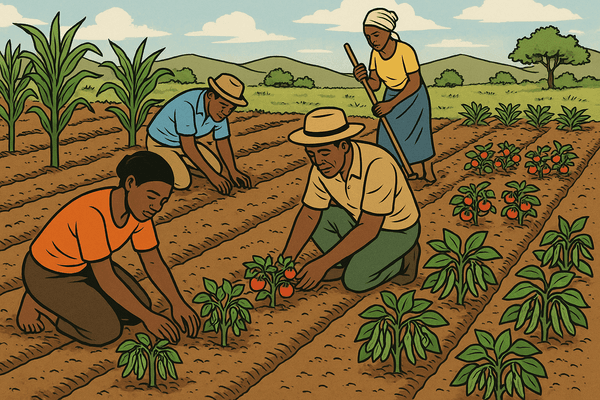
Activity 2: Learn new vocabulary - match the words on the left side with their meanings on the right side
You found 0 of 20 pairs.
No matches yet
Activity 3: Read the story and answer the questions
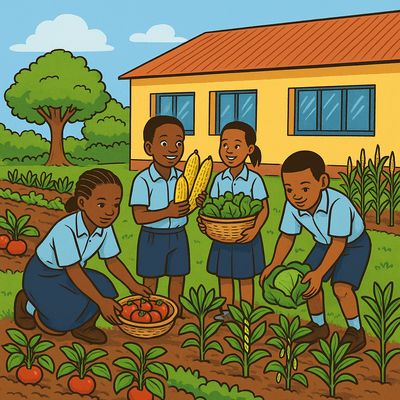
Growing for the Future
At Green Valley Primary School, the head teacher introduced a new idea — a community farming project to support food production and improve school meals. Pupils from Class Six were chosen to lead the project with the guidance of Teacher Mussa, the agriculture teacher.
"We are going to learn how to grow our own food," said Teacher Mussa. "This will help us understand agriculture and how it supports life."
The pupils began by ploughing the land behind the school. Together, they removed weeds, broke up the soil with hoes and harrows, and made neat furrows. The soil was checked for depth and quality to ensure it was fertile and rich in nutrients.
After preparing the land, the class carefully planted seeds of maize, beans, and vegetables. "Make sure the seeds are buried at the right depth and the soil is slightly moist," advised Teacher Mussa. "This helps the seeds to germinate."
Weeks passed, and green sprouts began to appear. The pupils took turns watering the plants, clearing new weeds, and protecting the crops from pests using natural methods like neem leaves.
As the plants grew taller and stronger, the pupils observed the changes. "The crops are healthy because we used good farming practices," said Amina proudly. "This will really increase food production in our school."
Finally, harvest time arrived. The pupils collected baskets of fresh maize and vegetables. Some were used to prepare school meals, while others were sold to buy more purchasing seed for the next season.
Through this project, the pupils learned that food production is not only about growing crops, but also about teamwork, planning, and caring for the environment.
What was the main purpose of the school farming project?
Who guided the pupils in the farming project?
What tools did the pupils use to break up the soil?
What is the importance of fertile soil?
What do nutrients in the soil help with?
What is meant by the word "germinate"?
How did the pupils protect the crops from pests?
What does food production mean in the story?
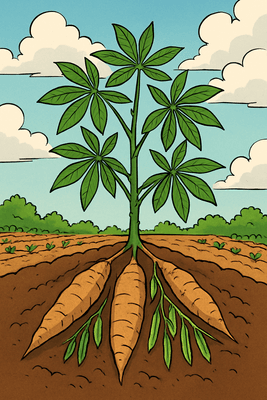
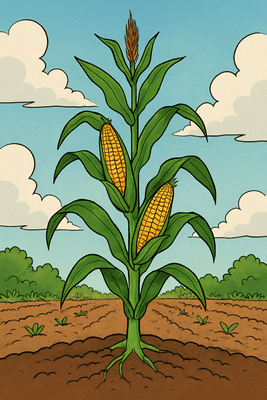
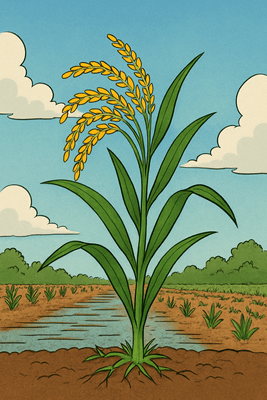
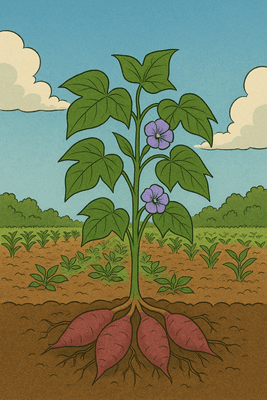
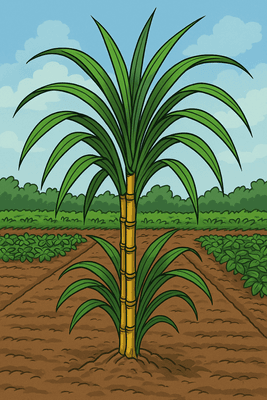
Activity 4: Fill in the blanks by describing the picture
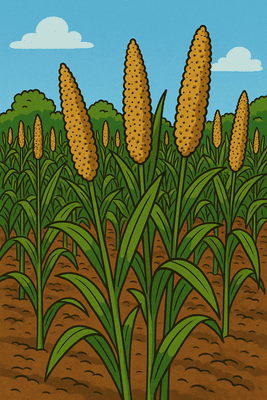
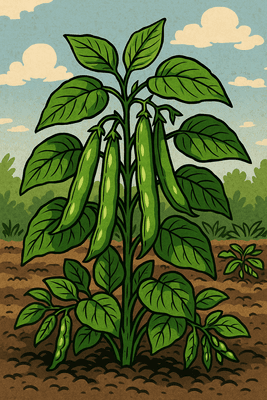
Activity 5: Listen to the audios and write down what you hear
Activity 6: Sort the following food crops into the correct categories
cerials
Available Items:
Your Selection:
Choose the elements from above
roots and tubers
Available Items:
Your Selection:
Choose the elements from above
legumes
Available Items:
Your Selection:
Choose the elements from above
fruits
Available Items:
Your Selection:
Choose the elements from above
vegetables
Available Items:
Your Selection:
Choose the elements from above
Activity 7: Listen to the story and answer the questions
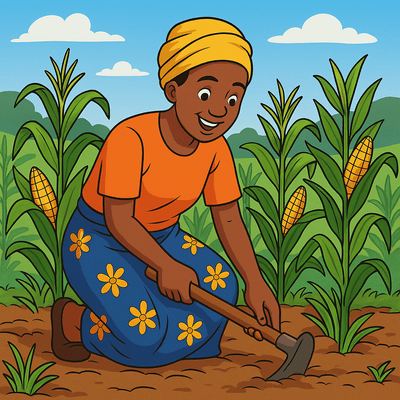
What is maize used for in Tanzania? Maize is used to make __________
Ugali, porridge, and other delicious meals.
Pilau, cake, and porridge.
What is the first step when planting maize?
The first step is preparing the land by clearing grass, weeds, and burning dry leaves.
The first step is to dig holes.
How do farmers prepare the soil for planting?
Farmers do not prepare the soil.
Farmers prepare the soil by ploughing it using hoes, oxen, or tractors.
What do farmers put in each hole during planting?
Farmers put leaves of a maize plant on each hole.
Farmers put two or three healthy maize seeds in each hole.
What helps the seeds grow better after planting?
The seeds grow better when farmers water them with soda.
The seeds grow better when farmers apply organic or chemical fertilizer to give nutrients.
How long does it take for maize to be ready for harvest?
It takes about three to four months for maize to be ready for harvest.
It only needs four weeks.
Why is planting maize important?
Planting maize is not important because most only a few people need it.
Planting maize is important because it helps feed families and communities.
How do farmers take care of young maize plants?
Farmers take care of young plants by weeding the fields and protecting them from pests and diseases.
Farmers take care of young maize plants by protecting them from sun.
Activity 8: Choose the right words from the blue box and write them in the blanks
Farmers begin the season by the land to prepare it for planting.
After three months, the rice was ready for.
We planted to add protein to our meals.
Some plants store food in their .
like insects can damage young crops.
is the main activity in many villages.
After three days, the bean seeds began to .
Farmers use compost to make the soil more .
takes up space and nutrients from the soil.
We must choose good to get healthy crops.
The farmer dug with a hoe.
Activity 9: Arrange the sentences so as to make a good composition by giving them letter A-E
36: We cover the seeds with soil and press gently.
37: First, plough the land to make the soil loose and remove weeds.
38: Finally, water the field to keep the soil moist and help the seeds germinate.
39: We place two or three maize seeds in each holes.
40: We dig furrows or holes where the maize seeds will be planted.
Choose the correct options:
Activity 10: Decide if the statements are true or false
Digging trenches helps with watering and prevents soil erosion.
true
false
Food production means growing and collecting food from farms
true
false
People in the community can share tools and land when farming together.
true
false
Seeds grow best in dry and hard soil.
false
true
Buried weed is helpful because it supports the crops.
false
true
A hoe can be used to bury weed during ploughing.
true
false
Harrows are used to harvest crops.
false
true
Legumes help improve soil fertility.
false
true