Unit 16
Healthy and hygienic living
Activity 1: Look at the picture and answer the questions
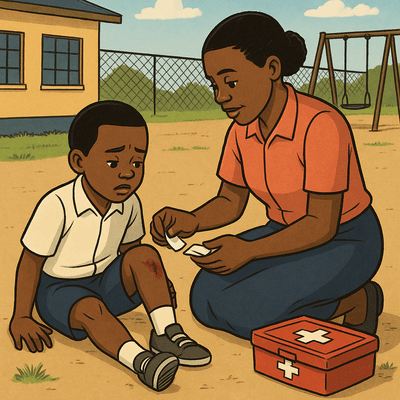
Where did the boy get injured?
Which part of the body did the boy get injured?
What did the teacher use to help the boy?
What items are usually found in a first aid box
Why is first aid important?
Activity 2: Read the story and answer the questions
Juma Gets Hurt at the Playground
One sunny afternoon, Juma was playing football with his friends at school. The field was dusty, and everyone was having fun. Suddenly, Juma fell and injured his knee on a sharp stone. He cried out in pain. His leg was bleeding, and there was dirt and dust around the wound.
The teacher came quickly and took Juma to the school clinic. The nurse washed her hands and wore clean gloves. She used a cotton swab with warm water to gently clean the wound. Then, she added some antiseptic using cotton wool to kill the germs.
She told Juma, "We must not leave cotton wool on the wound because its fibres can stick inside and cause infection." Instead, she covered the wound with clean gauze and a bandage.
Juma was also given a clean handkerchief to wipe his face. The nurse reminded him, "It is important to keep your wound clean and hygienic. Avoid playing in the dust until you are better."
When Juma got home, his mother ironed his clean clothes and changed his bedding to stop bacteria from spreading. She also made sure there was no stagnant water around the house, so mosquitoes and other pests would not come.
From that day, Juma learned the importance of personal hygiene, first aid, and clean habits. He promised to always play safely and keep his environment tidy.
What was Juma doing when he got injured?
What caused Juma's injury?
Where was the wound located?
Where did the teacher take Juma?
What did the nurse use to clean the wound first?
Why shouldn't cotton wool be left on a wound?
What did the nurse use to cover the wound?
Which word best describes Juma’s environment after his injury?
What did the nurse wear before treating Juma?
Activity 3: Learn new vocabulary - match the words on the left side with their meanings on the right side
You found 0 of 17 pairs.
No matches yet
Activity 4: Choose the right words from the blue box and write them in the blanks
germs live in unclean places.
The nurse cleaned the wound with a.
Many children missed school due to.
Washing your hands after using the toilet is good .
Some help, but others make us sick.
You should use cleanwhen treating a wound.
The kept the gauze from falling off.
Coughing without covering your mouth can spread.
A kitchen keeps food safe.
Clean water is important for the of the community.
Activity 5: Decide if the statements are true or false
Sharing personal items like toothbrushes is worth it to save money.
true
false
Using clean water and soap helps to kill germs on our hands.
true
false
Ironing clothes can help kill bacteria in clothes and keep them neat.
false
true
Stagnant water is safe and good for drinking.
false
true
Personal hygiene means keeping your body clean and healthy.
true
false
A handkerchief should be clean and used for wiping the nose or mouth.
true
false
It is safe to use any gadget without checking if it is clean.
false
true
Activity 6: Look at the pictures and name the hygiene items
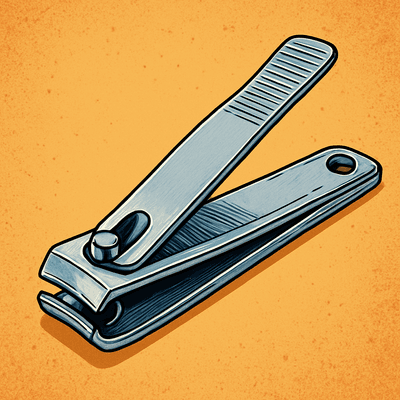
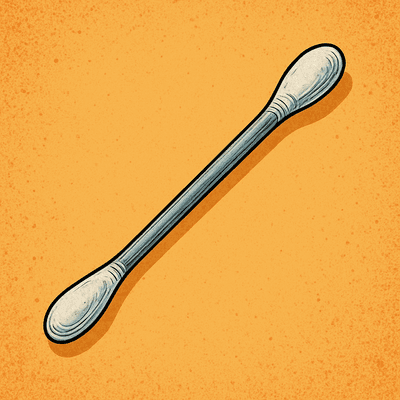
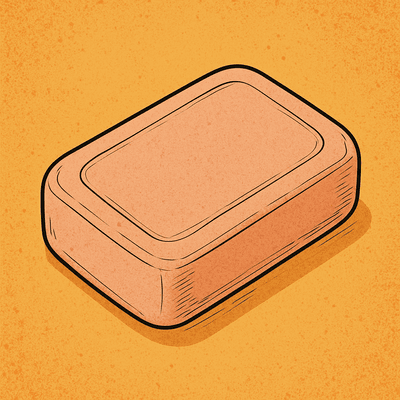
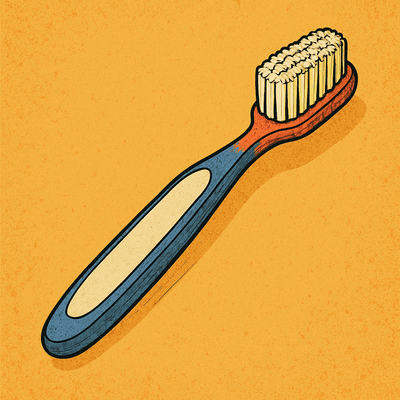
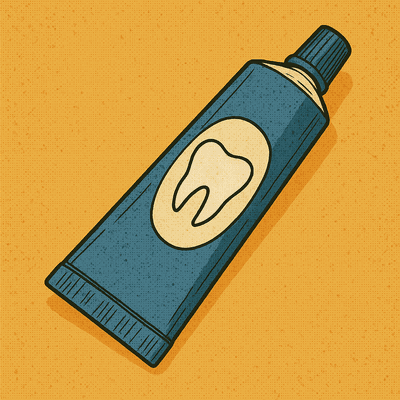
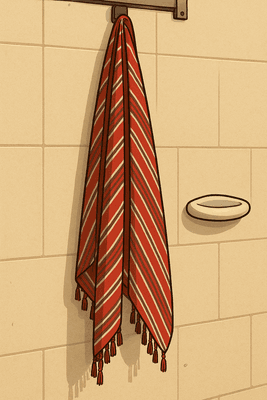
Activity 7: Learn the main punctuation marks
Punctuation means the marks we use in writing to make meaning clear. These marks show when a sentence ends, when someone is asking a question, when someone is speaking, or when something exciting happens.
1. Why is Punctuation Important?
- It helps us understand what we read or write.
- It shows where a sentence ends or continues.
- It tells us when to pause or stop.
- It helps avoid confusion in writing.
Example:
- ✅ Let’s eat, grandma! → You're talking to grandma.
- ❌ Let’s eat grandma! → Sounds like you're eating her!
2. Types of Punctuation Marks
2a. Full Stop (.)
Used at the end of a sentence. Example: We wash our hands every morning.
2b. Comma (, )
Separates items in a list or shows a short pause. Example (list): We use soap, water, and a towel. Example (pause): After school, she took a bath.
2c. Question Mark (?)
Used at the end of a question. Example: Do you clean your teeth daily?
2d. Exclamation Mark (!)
Shows strong feelings like excitement, surprise, or warning. Example: Watch out for the fire! Example: What a neat room!
2e. Apostrophe (’)
Shows:
- Possession: something belongs to someone
- Contractions: shortened words
Example (Possession): This is James’s towel. Example (Contraction): Don’t touch dirty wounds.
2f. Quotation Marks (" ")
Show someone’s exact words. Example: The doctor said, "Keep the wound clean."
2g. Colon (:)
Used to introduce a list or explain something. Example: You need: gloves, gauze, and scissors.
2h. Semicolon (;)
Joins two related sentences. Example: She cleaned the room; then she washed her hands.
2i. Hyphen (-)
Joins two words into one compound word. Example: We packed a first-aid kit.
2j. Brackets / Parentheses ( )
Add extra or helpful information. Example: Wash tools (like razors and combs) after use.
Activity 7a: Write the sentences and add the correct punctuation marks
Activity 8: Listen to the story and fill in the blanks with the correct punctuation marks
On SaturdayMama said"Let's go to the marketI quickly wore my shoesgrabbed the basketand followed herAt the market we bought tomatoesonionsbananasand fish "Can I choose the mangoesI asked. Mama smiled and said, Yes, but pick the ripe onesIt was a busy and exciting day at the market
Activity 9: Learn about conjunctions
1. What Are Conjunctions?
They are used to connect words, phrases, or clauses of equal importance in a sentence.
1a. "And"
– To add or combine ideas:
- Function: Joins two or more similar ideas, actions, or descriptions.
- Meaning: Adds information or continues a thought.
- Use with nouns: We packed soap and towels.
-Use with verbs: She cleaned and dried the dishes.
- Use with clauses: We cleaned the room, and we opened the windows.
✅ Example:
The patient was given medicine and plenty of rest.
You must wash your hands and cover your mouth when sneezing.
1b. "But"
– To contrast or show opposite ideas
- Function: Joins two different or opposite ideas.
- Meaning: Shows contrast, disagreement, or something unexpected.
- Use with clauses: He wanted to help, but he was too tired.
- Use to change direction: The room looked clean, but it smelled bad.
✅ Example:
- She is young but very responsible.
- I like playing football, but I don’t enjoy watching it on TV.
- Shows a difference or exception
- He was tired, but he finished his homework.
1c. More conjunctions
- or – gives a choice
- so – shows result or effect
- yet – introduces something unexpected
1d. Example sentences:
- Eliza is polite and respectful.
- She dropped the plate, but she said sorry.
- You can have juice or water.
- It was late, so they went to bed.
- He was tired, yet he helped his sister.
2. Subordinating Conjunctions
These join a main clause and a dependent clause (one part depends on the other).
Common examples:
- because – gives reason
- when – shows time
- if – gives a condition
- although – shows contrast
- while – shows time or contrast
- since – shows time or reason
Example sentences:
- Eliza was happy because her aunt visited.
- When the guests arrived, she stood up to greet them.
- If you are kind, people will like you.
- She cleaned the mess although she was not the one who broke it.
- Jamal helped while she got the mop.
3. Correlative Conjunctions
These come in pairs and work together.
Common examples:
- either...or
- neither...nor
- both...and
- not only...but also
Example sentences:
- You can offer either juice or tea.
- Both Eliza and Jamal were polite.
- Not only did she say sorry, but also helped clean up.
Activity 9a: Choose the correct word — "but" or "and" — to fill in the blank.
She washed the dishes cleaned the kitchen.
He was feeling tired, he finished his homework.
The floor was clean the windows were still dirty.
The soap is softsmells good.
She is young,she knows how to take care of herself.
She wanted to wake up early,she forgot to set an alarm.
They brought gauze, scissors, cotton wool for the first-aid kit.
Activity 9b: Fill in the blanks with both "but" and "and"
She cleaned the wound applied medicine, it was still painful.
The food was hot fresh, I wasn’t feeling hungry.
They cleaned the classroom arranged the chairs,they forgot to empty the bin.
I wanted to take a shower change my clothes, there was no water.
She is always neattidy,her little brother is the opposite.
I wrote my homework neatly checked it twice, I still made a mistake.
We brought soap a towel, we forgot the basin.
She likes brushing her teethwashing her face, she hates using cold water.
Activity 10: Fill in the blanks with "but" and "and"
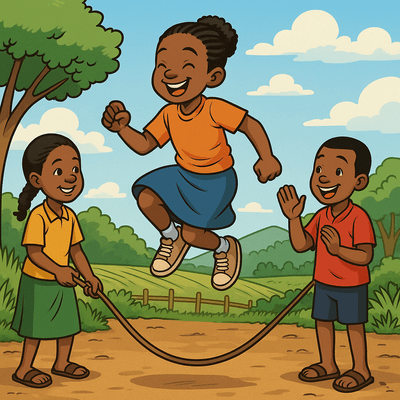
Halima woke up early in the morning brushed her teeth. She washed her face cleaned her ears. Her little brother wanted to play, Halima said, "Let's eat breakfast first." She ate mandazi, cassavadrank tea. She wanted to eat chips,her mother said, "Healthy food is better." Halima smiled finished her breakfast. After breakfast, she helped her mother sweep the yard wash the dishes. Her hands were dirty, she remembered to wash them with soap. In the afternoon, Halima played outside with her friends. They ran, laughed,played jump rope. It was fun, they got very sweaty. Halima took a bath changed into clean clothes. At night, she felt tired happy. She had lived a clean healthy day. She said goodnight to her family went to sleep with a smile.
Activity 11: Use the correct conjunctions from the blue box to complete the sentences
You can use a toothbrush a chewing stick to clean your teeth.
We use soap it kills germs.
does exercise help the body, it keeps the mind fresh.
I study hard, I will become a doctor.
You caneat fruitsdrink juice to stay healthy.
Juma Juliet remembered to water the flowers today.
I had a fever, I stayed at home and rested.
mother was cooking, I was cleaning the table.
the lions were hungry, they were not hunting.
the nurse entered the room, the children stood up and greeted her.
Activity 12: Put the sentences in the correct order
36: The teacher thanked Anna for her quick action and reminded the class about the importance of first aid.
37: Anna found her little brother crying in the playground and noticed he had scratched his arm.
38: She called their teacher to inform him about the injury and the treatment she had applied.
39: She wore gloves and used warm water and soap to clean the wound before applying antiseptic cream.
40: Finally, she covered the wound with a clean plaster from the first aid box.
Choose the correct options: