Unit 19
A successful batik project
Activity 1: Read the poem and answer the questions
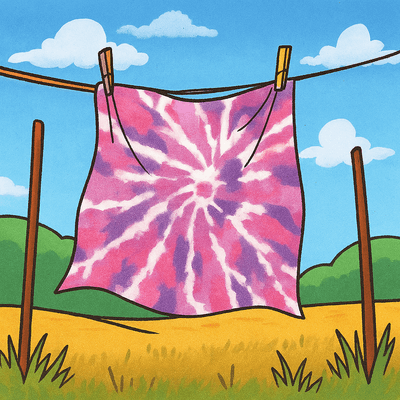
On cotton cloth with colours bright, The patterns dance in morning light. With wax and dye, the work begins, And every shape and swirl soon wins.
The cloth is dipped, then hung to dry, As flowers bloom and birds may fly. Each piece is made with love and care, A story told through art we wear.
From busy hands the colours spread, With yellow, blue, and fiery red. Our culture shines in cloth so fine - Batik, a Tanzanian sign!
Activity 1a: Answer the questions
Activity 2: Learn new vocabulary - match the words on the left side with their meanings on the right side
You found 0 of 14 pairs.
No matches yet
Activity 3: Choose the right words from the blue box and write them in the blanks
Fatuma was in abecause she didn’t want to be late for the batik class.
We used different colors of fabric,, blue and yellow.
They put the wax on the whiteto start the design.
The teacher gave advicethe next steps of the project.
We cleaned all the toolsafter the workshop ended.
In, you sell many things together for a lower price per item.
Baraka tried tohis brother’s batik design, but it didn’t look the same.
The group earnedby selling their batik bags and shirts.
In, people pay a little more because they buy only one or two items.
Activity 4: Listen to the audios and write down what you hear
Activity 5: Learn about adverbs
1. What is an adjective?
An adjective tells us how something or someone is. ➡️ It describes a noun (person, place, or thing).
Examples:
- She has a beautiful dress.
- That is a small shop.
- He is a serious boy.
2. What is an adverb?
An adverb tells us how, when, or where something is done. ➡️ It describes a verb (an action).
Examples:
- She sings beautifully.
- He walked quickly.
- We finished early.
3. How are adverbs formed?
Many adverbs are made by adding -ly to an adjective:
| Adjective | Adverb |
|---|---|
| quick | quickly |
| serious | seriously |
| proper | properly |
| slow | slowly |
| careful | carefully |
Careful: Some adjectives end with "y":
➡️ Change the -y to -i, then add -ly
| Adjective | Adverb |
|---|---|
| happy | happily |
| easy | easily |
| angry | angrily |
| busy | busily |
4. Irregular adjective – adverb pairs
| Adjective | Adverb | Example |
|---|---|---|
| good | well | She speaks well. (not good) |
| fast | fast | He runs fast. |
| hard | hard | They work hard. |
| late | late | We arrived late. |
| early | early | She comes early every day. |
| straight | straight | Go straight home. |
| high | high | The bird flew high. |
| low | low | He spoke low. |
| long | long | They waited long. |
| daily | daily | We meet daily. |
💡 Some adverbs look like adjectives – you just have to learn them!
5. When do we use adjective or adverb?
| Use | Example |
|---|---|
| Describing a noun → adjective | It is a happy child. |
| Describing a verb → adverb | He runs happily. |
| With be, feel, seem → adjective | She is tired. / It seems easy. |
6. Quick summary:**
✅ If it answers the question “How is it?” → use an adjective ✅ If it answers the question “How does someone do something?” → use an adverb
Activity 5a: Write down the adverb of each adjective
quick:
proper:
good:
careful:
slow:
easy:
fast:
happy:
hard:
kind:
Activity 6: Listen to the audio and fill in the blanks with the words you hear
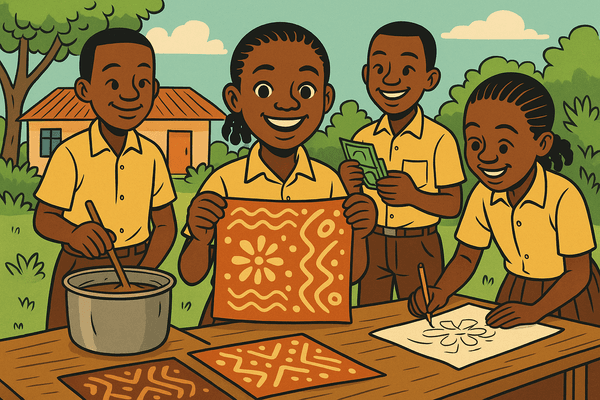
Last term, Gloria and her classmates joined a batikat school. Their teacher, Teacher Juma, explained everything. Everyone listenedbecause batik work needs proper attention. Gloria and her group workedand stayed very organized. They melted theslowly and drew their designs neatly on white. The patterns lookedand creative. After the workshop, they sold the batik clothes in the school shop. Some were sold at, and others into a local market. The pupils kept recordsand managed their money seriously. The head teacher was proud, and Gloria felt very. She said, “Next time, I want to be a real!"
Activity 7: Fill in the blanks with adverbs from the blue box
The sun rises in the morning.
He is a good pupil and listensin class.
They danced after winning the prize.
Mussa finished his homework very.
We work every day to finish our batik project.
Diana answered all the questions very, which is why she got a good grade in the exam.
Activity 8: Choose the correct answer
The batik design was ______ and colorful.
nice
nicely
This is a very ______ task.
easily
easy
They finished the task ______.
quickly
quick
You answered the question ______.
correctly
correct
Baraka was ______ when he helped his sister.
kindly
kind
They worked ______ to finish the batik project.
hard
hardly
Please walk ______.
slow
slowly
David sings ______.
well
goodly
The pupils solved this activity ______.
easy
easily
Activity 9: Fill in the blanks using the words in brackets - choose whether an adjective or an adverb is needed
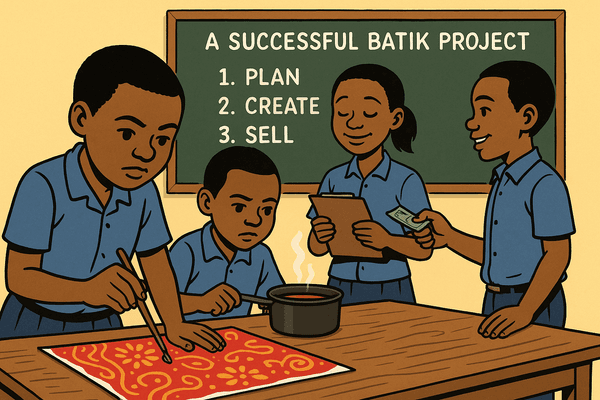
Last term, our class started a batik project. It was a very(good) idea, and everyone was excited to join. On the first day, the teacher explained everything(clear). We listened(careful) and asked questions. We worked in groups. My group was very(helpful) and helped each other. We drew our patterns(neat), using pencils and rulers. Then we heated the wax. The wax melted(quick), and we had to be(careful) when using it. Some pupils worked(quick) and finished early. Others took their time and worked more(slow), but the results were all beautiful. We printed our fabrics and let them dry in the sun. The colors were(nice) and bright. After the project, we sold the items in the school shop. We made enough money to buy new tools. The head teacher was(proud) of our work and said we behaved(good) during the whole activity. We learned that working together and taking things(serious) brings good results. It was truly a(successful) batik project!